AssetMapping.Events

Sponsor Prospectus · Prepared for 4M Analytics

One City. One Problem.

The Hidden City

Every project starts with the same unanswered question: what's already in the ground?

A six-event, problem-led webinar series for U.S. local government. Each session takes one recognizable city problem, from a busted road budget to a lead-line deadline, and works it through with independent experts. 4M brings the expertise at the moment utility knowledge decides the outcome. No customer has to present for any event to happen.

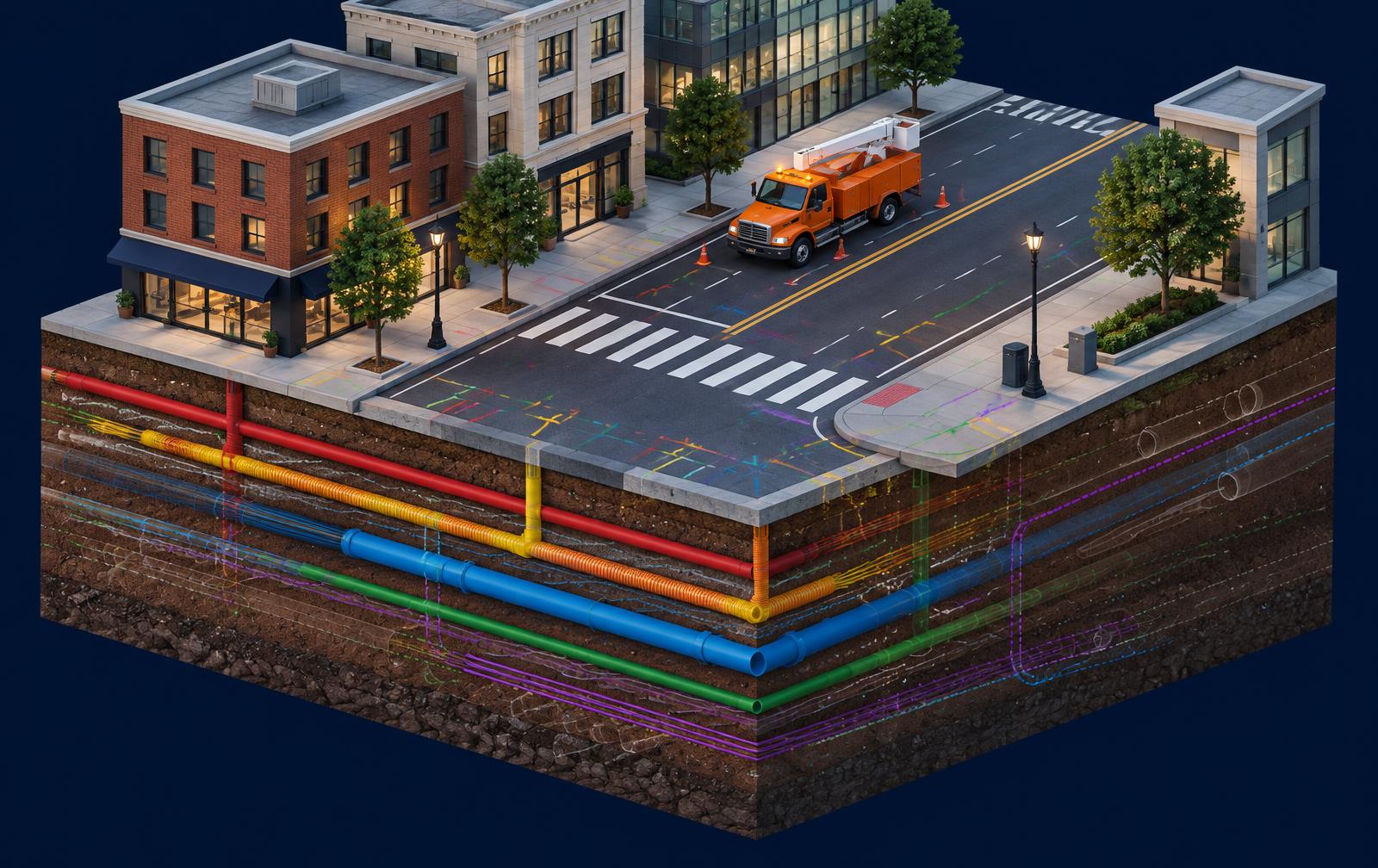
Isometric cutaway of a downtown street with known and unknown utility lines below the pavement
What we know vs. What's actually there
120,000+
local-government contacts
6
live problem-solving sessions
6
Post-Event Intelligence Reports
1
year-end State of Underground Knowledge report
Change orders◆811 gaps◆As-builts◆Utility conflicts◆Lead service lines◆Fiber builds◆Right-of-way◆ASCE 38◆Feasibility◆Utility coordination◆Retiring staff◆Records that don't match reality◆Change orders◆811 gaps◆As-builts◆Utility conflicts◆Lead service lines◆Fiber builds◆Right-of-way◆ASCE 38◆Feasibility◆Utility coordination◆Retiring staff◆Records that don't match reality◆
Presented by 4M AnalyticsOrganized by ConnectMii EventsHosted on AssetMapping.EventsLive 11:00 AM–12:30 PM Mountain
02The Problem

Cities make above-ground decisions on below-ground guesses.

Budgets, routes, grant estimates and construction schedules are set long before anyone digs. They rest on records that are incomplete, outdated or missing. Some systems aren't in 811 at all. Drawings drift from the ground. The people who knew where everything is are retiring. The unknowns that survive into construction show up as change orders, delay claims and line strikes.

The less you know early, the more you pay late.

The cost of finding out

Illustrative
Planning
Design
Procurement
Construction

What the 2026 audience told us

Mapping the Hidden City · AI-Powered Utility Data in Practice · June 16, 2026

64%
rely on utility owners for records
43%
encounter utility issues in construction
44%
of attendees were local government

Live poll results from one session; multi-select questions do not total 100%.

4M Analytics

Why 4M

4M compiles scattered public utility records, as-builts, permits and imagery into one map, so agencies and their engineers can see what's likely underground on day one of a project instead of month four. The series topic is the decision 4M already informs.

AI-mapped data is a planning tool, not an ASCE 38 quality level. The series says so plainly, and that honesty is what makes the audience trust the sponsor.

03The Format

90 Minutes. One Problem. One Decision.

Not three presentations stitched together. A moderated problem-solving session.

  1. 0110 min

    The Problem

    The moderator sets up the city, the project, the budget, and what records exist. “What would you do?”

  2. 0215 min

    The First Response

    Each expert answers one clearly defined question.

  3. 0310 min

    The Complication

    New information lands mid-session.

  4. 0425 min

    Build the Solution

    Sequence, quality levels, cost, risk, schedule. 4M's expertise is most relevant here.

  5. 0515 min

    The Audience Decides

    Live polls, including the Signature Poll.

  6. 0615 min

    The Path Forward

    “If this were our city,” with three practical next actions.

Complications:The records are from 1974.The water system isn't in 811.The bid opens in 30 days.There's a midstream gas line nobody mentioned.The utility coordinator retired last month.

Traditional webinar

Customer → Project → Product → Results

Dependent on one customer being willing to participate.

One City. One Problem.

Problem → Experts → Complication → Decision → Technology in context → Path forward

Dependent only on a problem worth solving.

Customer stories don't disappear — they become optional.

15-minute moderated interview
Recorded cameo
One project lesson
Anonymous case evidence
04The Series

Six problems. One year. One path from unknown to decided.

One event every eight weeks. The sequence moves from project pain to program risk to institutional risk.

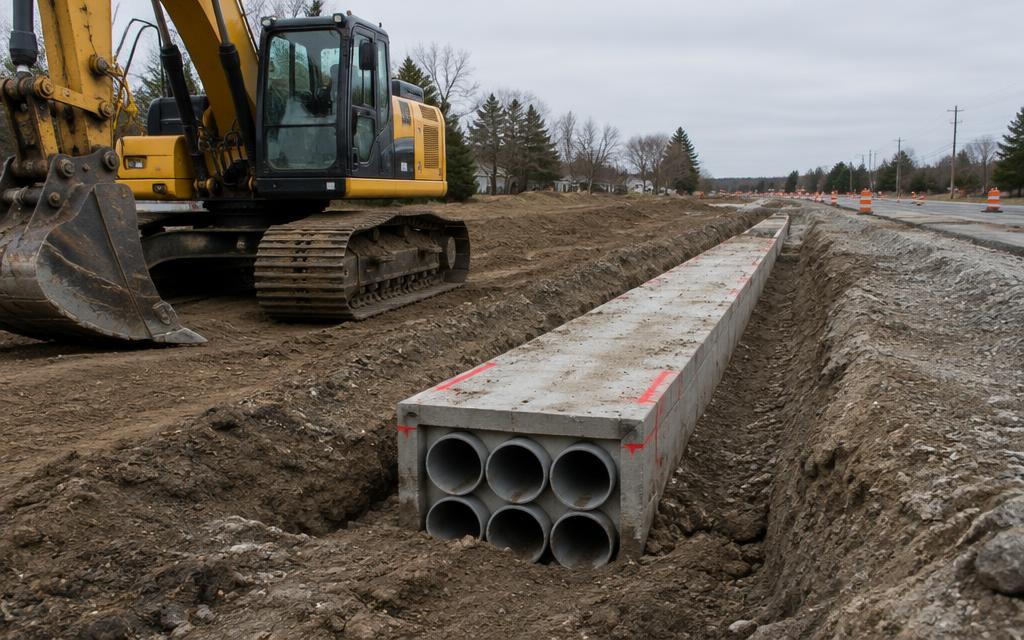
Excavator stopped beside an exposed unmarked concrete duct bank in a half-built road
Event 01Capital Projects

The Change Order Nobody Budgeted

What would knowing earlier have been worth?

The city problem“A $14M road reconstruction is three weeks into construction when the crew hits a duct bank nobody's drawings showed. The contractor files a delay claim. Council wants to know how this happened.”
  • Where utility unknowns enter the project budget
  • Records research vs. field verification: what each quality level buys
  • Moving utility coordination from 60% design to schematic
  • Building utility risk into contingency and fee proposals
Who leans in
City Engineers, Capital Program Managers, Public Works Directors, Finance
4M role
Early-stage utility picture and conflict identification

Planner working late at a desk with a city map on screen and a circled calendar date
Event 02Grants & Feasibility

The Grant Application Due Friday

How good does “good enough” need to be?

The city problem“A state infrastructure grant closes in five days. The application needs a route, a cost estimate and a constructability statement. There is no time for field work.”
  • What a defensible feasibility estimate actually requires
  • Desktop utility research in days, not months
  • Flagging crossings, midstream lines and permits early
  • Stating confidence honestly in a grant application
Who leans in
Grants Managers, City Engineers, Planning, Consultants
4M role
Rapid feasibility and routing scenarios
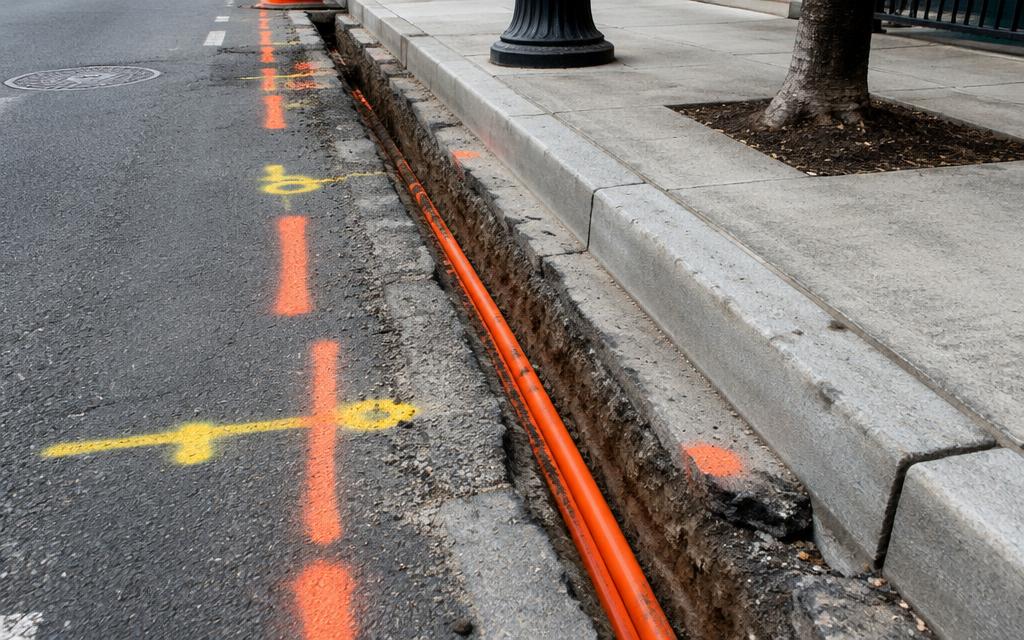
Fiber conduit trench along a downtown curb with orange and yellow paint marks
Event 03Right-of-Way

The Fiber Build That Hits Everything

How do you move fast without breaking what's already there?

The city problem“Three providers want to trench fiber through the same downtown corridor this year. Permit volume has tripled. Last month a contractor struck a gas service line.”

Mid-session twist: the strike after-action review.

  • Right-of-way permitting under deployment pressure
  • Where 811 ends and municipal knowledge has to begin
  • Pre-screening permit routes against known utilities
  • Damage prevention as a shared city–provider responsibility
Who leans in
ROW Managers, Permitting, Public Works, Broadband Program Leads
4M role
Corridor utility picture for permit review and route screening
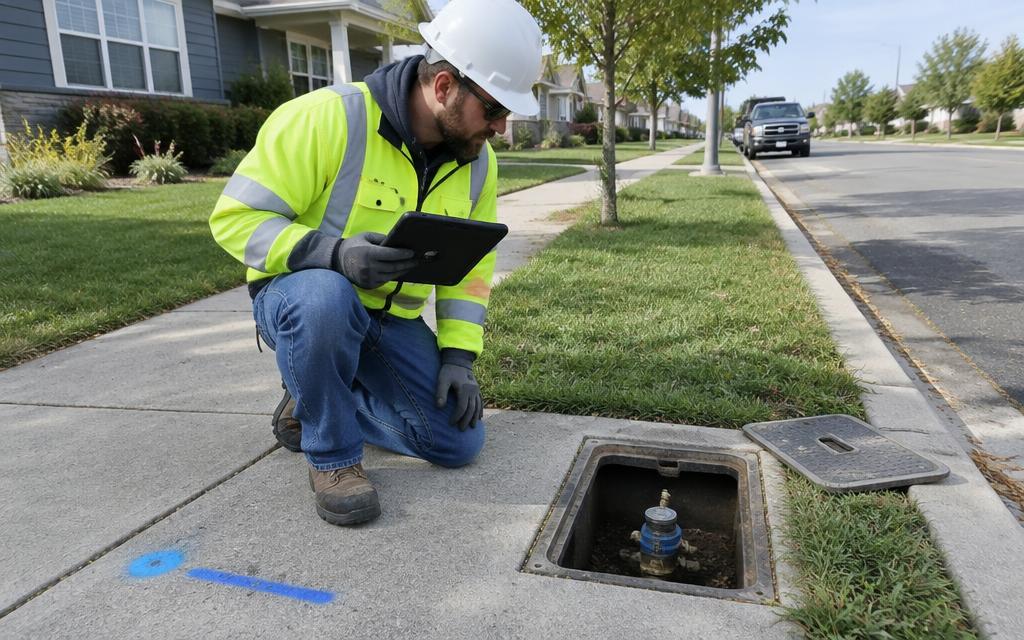
Utility worker with a tablet kneeling at a residential curb stop
Event 04Water Compliance

The Lead Line Deadline

Where do you start when the records are the problem?

The city problem“The utility has to inventory and replace lead service lines on a federal timeline. Thousands of lines are listed as ‘unknown material.’ The records are index cards and 1950s tap cards.”
  • Building an inventory from incomplete records
  • Prioritizing field verification where it matters most
  • Combining records, predictive methods and inspection
  • Communicating uncertainty to regulators and residents
Who leans in
Water Utility Directors, Compliance Managers, GIS, Public Works
4M role
Compiled records and surface evidence to target verification
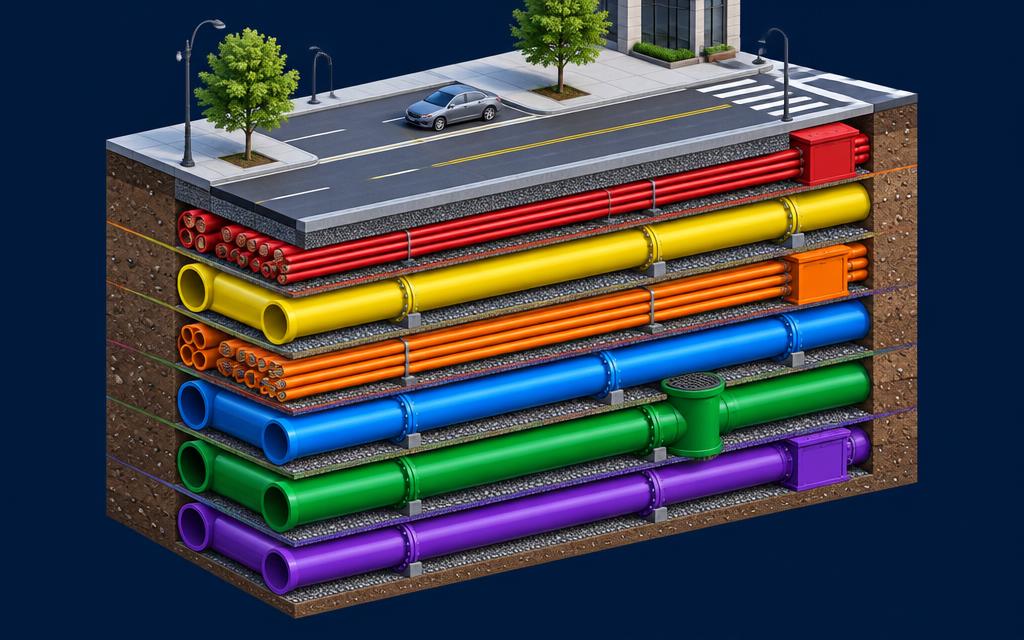
Cross-section of one street showing six colored utility layers
Event 05Coordination

Six Owners, One Street

Who knows what, and who owns the gap?

The city problem“A corridor project touches city water and sewer, a private gas utility, two telecom providers, a power co-op and a county storm system. Nobody has the full picture, and every relocation needs its own negotiation.”
  • Running utility coordination as a program, not a scramble
  • Shared base maps across owners and consultants
  • Relocation risk, schedules and cost allocation
  • What good coordination meetings actually produce
Who leans in
Utility Coordinators, City Engineers, DOT Liaisons, Consultants
4M role
Owner identification and a shared starting map
Veteran field worker handing a worn map binder to a younger colleague with a tablet
Event 06Institutional Knowledge

The Map That Retired

How do you rebuild what's in one person's head?

The city problem“The utility superintendent who could find any valve in town retires in June. Half of what he knows was never written down.”
  • Capturing field knowledge before it walks out the door
  • Turning scattered records into a living utility layer
  • Feedback loops: field corrections that improve the map
  • Making underground knowledge an asset, not a person
Who leans in
Public Works Directors, Utility Superintendents, GIS Managers, City Managers
4M role
Consolidated baseline that staff can correct and maintain
  1. Budget
  2. Feasibility
  3. Right-of-Way
  4. Compliance
  5. Coordination
  6. Knowledge

Moderator & speakers

Moderator

Greg Babinski, GISP

Founder, GIS Management Academy · URISA Past-President · AGS Ethical GEO Fellow

Recurring SME

Mike Murphy

Title TBC

Practitioners

City Engineer (TBC)

SUE / Utility Engineer (TBC) · Utility Coordinator or 811 Center Leader (TBC)

4M

4M Specialist

One per event

We recruit expertise around the problem, not logos around a webinar.

05The Signature Poll

“How confident are you in what's under your next project?”

Asked live at every event. Tracked across all six. By year-end, it becomes the first recurring measure of how much local governments actually know about their underground — and it gives 4M a standing data point no competitor has.

Very confident

verified in the field

Fairly confident

good records, a few gaps

Unsure

records exist, but we don’t trust them

Not confident

we expect surprises

We don’t know what we don’t know

Underground Confidence Index

Illustrative

A 0–100 index: the weighted average of responses, where 100 means every respondent is “very confident.” Populated live through the series.

by populationby departmentby project phase where issues appearby how records are collected

Asset Mapping Insights · Year-End Report

The State of Underground Knowledge in Local Government

A year-end, evidence-led report built from six events of signature-poll data, cross-tabbed by city size and department, alongside independent research and practitioner interviews. Presented by 4M. Independent in method.

  • Confidence Index trend across six events
  • Where cities first discover utility problems
  • How records are collected today
  • What separates confident agencies from the rest
  • Practical recommendations by city size
06Audience

Built for the people who decide what gets dug.

120,000+
U.S. local-government contacts
~300
target registrations per session
~150
target live attendees
20–30
additional on-demand viewers
8
weeks of promotion per session

Targets based on typical AssetMapping.Events programs; not guaranteed.

Who should attend

  • Public Works Directors & City Engineers
  • Capital Program & Project Managers
  • Utility Directors, Superintendents & Coordinators
  • ROW, Permitting & Planning
  • GIS & IT
  • City/County Managers, Finance & Grants
  • 37% Public Works & Engineering
  • 31% GIS & IT
  • 12% Utilities
  • 7% Planning & ROW
  • 14% Leadership, Finance & Other

Built for the people who sign the change orders, not just the people who map the lines.

07What 4M Gets

Presence, leads and content that lasts.

Visibility

  • “Presented by 4M Analytics” on all series branding, pages and registration
  • 4M logo and positioning on all emails and LinkedIn campaigns
  • Recognition at open and close of each session
  • A 4M specialist in all six sessions

Leads & Insight

  • Full opt-in registrant list per session (name, title, organization, jurisdiction)
  • Signature Poll plus live polls co-designed with 4M
  • Attendance and engagement reporting
  • Full Q&A transcript

Content That Keeps Working

  • Six Post-Event Intelligence Reports
  • The year-end State of Underground Knowledge report
  • Branded recordings on AssetMapping.Events
  • Rights to use reports and recordings in 4M sales and marketing
  • A series hub that stays live and indexed
08Intelligence Report

Every session becomes a lasting Intelligence Report.

Webinars end. Intelligence reports keep working. After each event, the Asset Mapping Insights team turns the recording into an evidence-led, web-published report with the scenario, the expert positions, the decision path, the audience data, every question answered and a practical field guide. It is independent in tone, credible to buyers, and something 4M can send to any agency.

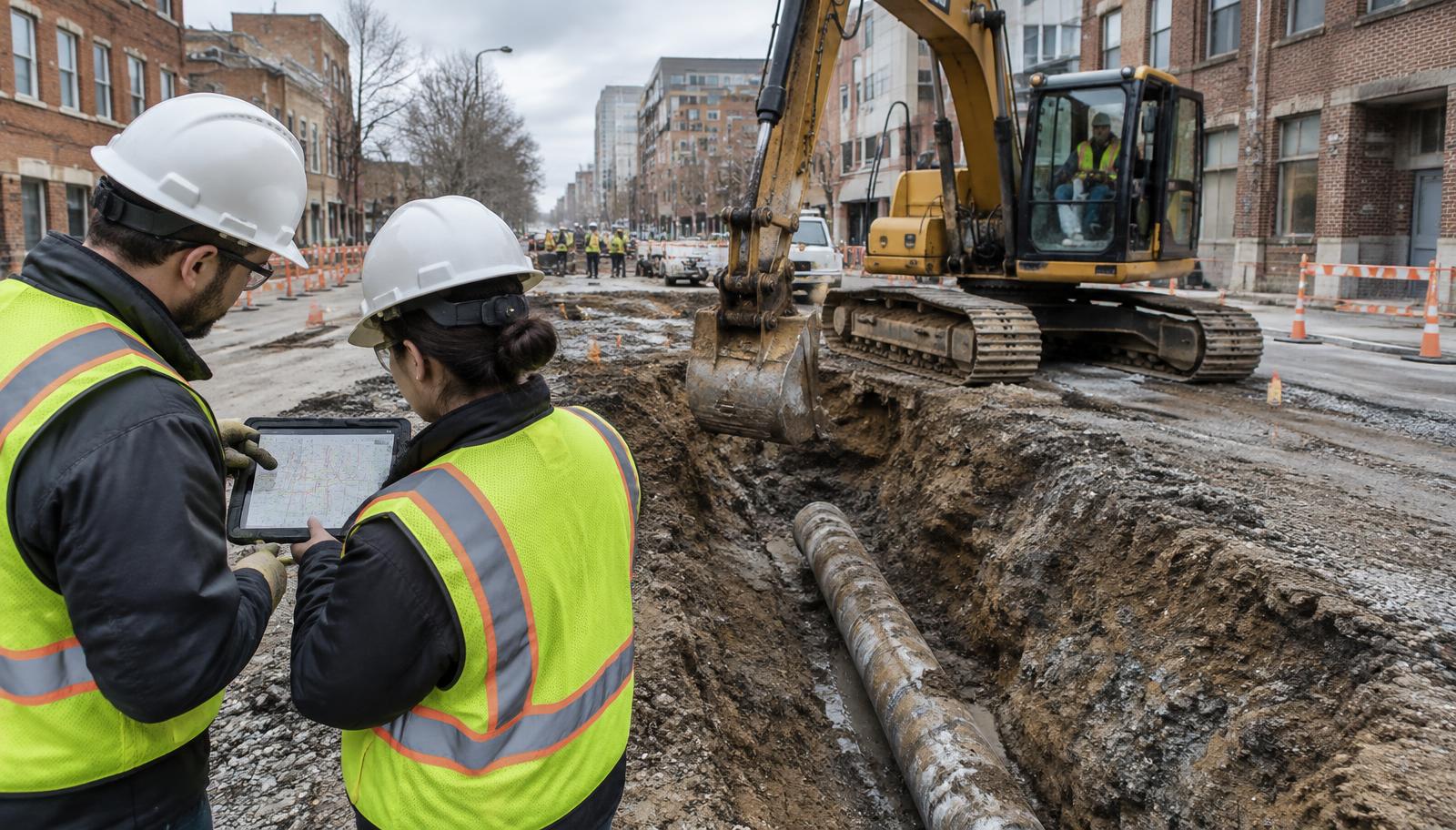
Crew reviewing a tablet map beside an exposed pipe

Asset Mapping Insights · Post-Event Intelligence Report

The Change Order Nobody Budgeted

Webinar · [Date TBD] · Event 1 of 6

What's inside each report

  1. 01Overview
  2. 02Key Takeaways
  3. 03The Scenario & The Complication
  4. 04Expert Positions
  5. 05The Decision Path
  6. 06Evidence From the Field
  7. 07Field Guide
  8. 08Audience Polls & Signature Poll
  9. 09Full Q&A
  10. 10Glossary, Speakers, Resources
Open the Sample Report

Format in production: AI-Powered Utility Data in Practice — 4M Analytics, June 2026

09Timeline

From commitment to year-end report.

Dates TBD — proposed series start [Month] 2027.

  1. Week 0

    Commit

    Agreement, kickoff, confirm 4M specialists

  2. Weeks 1–2

    Build

    Scenarios, speaker briefs, landing pages, Signature Poll design

  3. Week 2

    Launch

    Promotion opens 8 weeks ahead of Event 01

  4. Events 01–06

    Live

    Every 8 weeks, 11:00 AM–12:30 PM Mountain

  5. +10 business days per event

    Report

    Post-Event Intelligence Report published

  6. Series wrap

    Year-End Report

    State of Underground Knowledge published, plus consolidated audience and lead summary

10Investment

Presenting Sponsor — Full Series (6 Events)

Sponsorship fee

To be agreed

  • Presented-by branding across the series
  • A 4M specialist in all six events
  • Full opt-in registrant lists and engagement reporting
  • Co-designed polls plus the Signature Poll
  • Six Post-Event Intelligence Reports
  • Year-end State of Underground Knowledge report
  • Branded recordings and a permanent series hub

Optional add-ons

  • Executive roundtable dinner (WGIC Horizons+ format)
  • Regional in-person “Hidden City” workshop with a host city
  • Single-event partner sponsorship (by 4M approval)
11Why ConnectMii Events

Programming built from the problem out.

Problem-led programming.

We build from the operational problem out. Sponsors show up as practitioners, which is why audiences stay.

A local-government audience at scale.

120,000+ contacts across public works, utilities, engineering, GIS, finance and leadership.

Intelligence, not just webinars.

Every session becomes an evidence-led report under the Asset Mapping Insights brand.

REAL-WORLD PROBLEMS. REAL INTELLIGENCE. REAL IMPACT.